Guest Blog Post: Parental Narcissistic Abuse with Jay Janicki
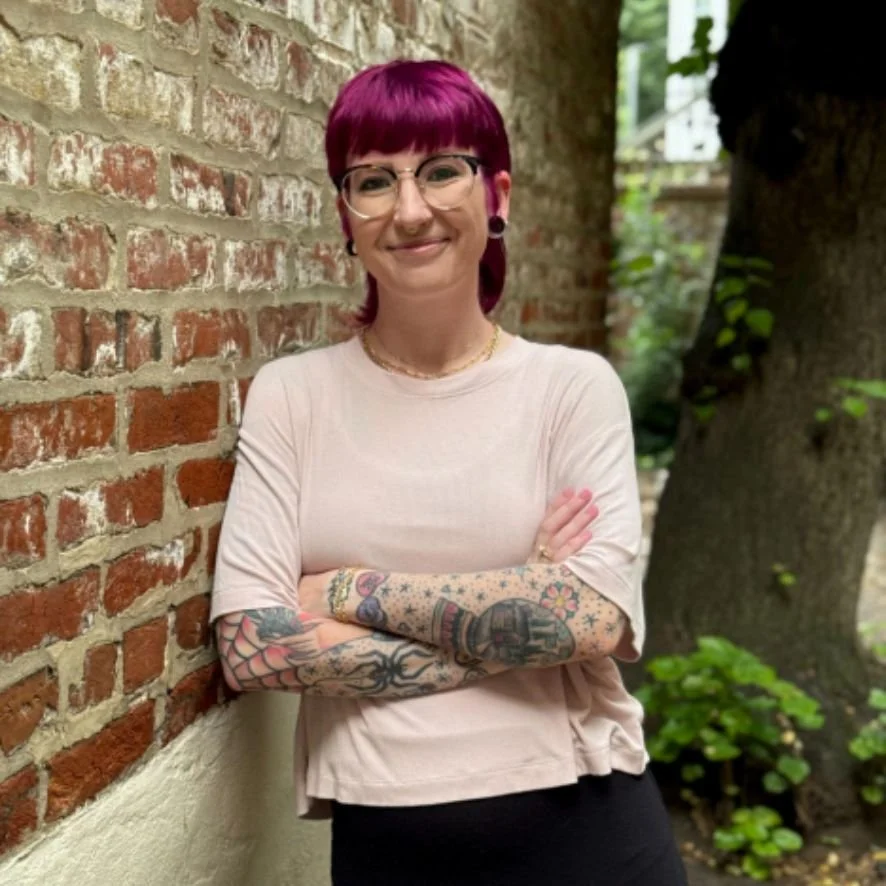
Hi, my name is Jay Janicki and I am a licensed professional counselor in the states of Delaware, Maryland, Pennsylvania, and North Carolina (coming end of 2025). I specialize in narcissistic abuse, ADHD/neurodiversity, LGBTQIA+ issues, and chronic pain/chronic illness. I am a group therapy lead, LPC, and ADHD Screening/Evaluation Provider at Better Minds Counseling and Services, practice owner of Janicki Holistic Healing, and non-profit co-founder of True Colors Collective.
Parental Narcissistic Abuse: Your permission slip to withhold that forgiveness everyone is demanding of you
Narcissism over the past few years has become what some may refer to as a “buzz word”. While I’d like to be a guest and write about how this is *just* a buzz word, it unfortunately is the reality for many. It’s important to talk about societal’s implied/obligatory forgiveness, this sense of unconditional love we should have for people, despite how cruelly they have harmed us. I am here to say one big takeaway that I hope you walk away with after reading this: forgiveness is not a requirement for healing, and can actually prevent you from it. Let’s talk about it.
Providing context before discussion is important, so I will lay out some definitions before diving deeper. Narcissistic abuse is a form of emotional and psychological abuse. This abuse stems from those who have these narcissistic or antagonistic traits. Narcissistic abuse does not discriminate - this can happen anywhere, from your own household, workplace, friend groups, or romantic partnerships. Some key patterns of behavior that exist within these dynamics include: gaslighting or emotional manipulation, minimization, devaluation, isolation, exploitation, and control. Control can show up emotionally, financially, socially, and even sexually.
Now let’s focus on the parents for a second. “They did the best with the tools they had” is something I hear often as a therapist and as a friend. While this may be true, we need to take a closer look at intention versus impact. I don’t believe that any parent wakes up one day and willfully chooses to pass on the generational curse of narcissism, but I’ve seen it happen. While some of this behavior can overlap with certain personality disorders and may very well stem from trauma, it doesn’t excuse the behavior, manipulation, and dismissiveness that exists within the realm of narcissistic abuse. Here’s a reminder for anyone struggling with this: the patterns of behavior may have stemmed from their parents or their trauma, but that is not your responsibility to stay put and be the punching bag for their unprocessed sh*t.
Parental narcissistic abuse, if present throughout someone’s life, can look very cyclical. Here is the typical cycle: 1. The parent idealizes the child, places expectations on said child, 2. The child needs the parent for something, the parent then resents the child’s needs, 3. Parent distraction, detachment, and distancing happens, 4. The parent may re-engage if the child is able to meet their needs; 5. Rinse & repeat. Enough to make someone’s head spin, exorcist style. That’s the whole point.
DIMMER + DARVO: two acronyms that are able to help you easily spot this behavior.
Let’s break it down:
Dismissiveness
Invalidation
Minimization
Manipulation
Entitlement
Rage
DIMMER rarely travels alone, it often comes along with…..
Denying the behavior
Attacking the person who named the behavior
Reversing
Victim &
Offender
Sound familiar? Now let’s talk about those around you who operate under the assumption that forgiveness = healing. I am here to tell you a secret: it doesn’t.
Forgiveness is not a requirement for healing from narcissistic abuse, whether it’s in regard to your parents, a friend, or a former romantic partner. Dr. Ramani (a renowned narcissistic abuse expert in the field) says something really beautiful about forgiveness in a podcast episode I’ve heard before, something along the lines of “you should not have to forgive someone for hijacking your soul” and that has not only resonated with me and my healing journey, but for many of the clients (both in individual therapy and group therapy) I work with in processing these issues. Forgiveness is expected, because the lack of forgiveness is viewed as “disrespect” in their eyes. The only disrespect existing in this dynamic is subjecting yourself to lather on the mask for your parents only to then abandon yourself by contorting yourself into whatever version of you they wanted at that given moment. You deserve more than being an emotional contortionist. You deserve freedom.
With freedom comes setting your own internal boundaries. Trying to set boundaries with a narcissist does not and will never work because there is no respect within the dynamic. Internal boundaries look like what is termed “gray rocking”, “yellow rocking”, and “firewalling”. What’s up with all the rocks and what do they mean?
- Gray rocking - minimal response, no affect, withdrawn, uninterested
- Yellow rocking - minimal response, superficial affect to mirror emotion expected, still giving minimal but showing enough “interest” to dodge any DARVO/DIMMER’ing happening
- Firewalling - chosen family and supports are crucial in surviving the holidays. Lean on your people. Leaning on supports, listening to music, creating… all of these are ways of firewalling, or protecting yourself, from the possibility of implosion surrounding the holidays
Let me provide some examples to get a better understanding of different ways this could present itself at your next family gathering:
- Gray rocking - “interesting, okay, cool, sure”
- Yellow rocking - “that’s awesome! Love that for you! Sounds cool!”
- Firewalling - calling or texting your supports, creating ways to take breaks throughout the holiday spent with family, going for a walk around the block on Christmas Eve, going to a friend’s house afterwards
Holidays are hard - narcissistic abuse makes it even harder. It’s this constant war with yourself: do I go and subject myself? Am I strong enough to be around them right now? Can I deal with the backlash of what would happen if I didn’t go? I hear you - it’s all so overwhelming. Parents may also tend to hoover, or “pull you back in”, around these familial gatherings and holidays.
I hope that throughout the remainder of this holiday season, you are able to protect your peace, not feel like you need to explain yourself, and spend time with those who celebrate your authentic self. Remember who you are, the tools you have, and the chosen family you have as you navigate this season’s challenges. Family doesn’t require forgiveness - family requires unconditional love. If this unconditional love is found in other places, hold onto that, celebrate it, and lean into it. You are deserving and worthy of unconditional love, in whatever ways that takes shape.
About Jay Janicki
Need support? Looking for Narc Abuse Resources?
Email: info@betterminds-counseling.com
Instagram: @bettermindscounseling@janickiholistichealing
Thanks for reading the Deconstruction Counseling blog!
This psychoeducational article was created for the Deconstruction Counseling community. Deconstruction Counseling is based in Olathe, Kansas and serves clients throughout the Kansas City area, including Overland Park and surrounding Johnson County communities. Click here to learn more about Deconstruction Counseling.