When Anxiety Manifests as a Stomachache
Millions of people describe worry as “a knot in my stomach,” “butterflies that won’t stop,” or repetitive stomachaches with no clear medical cause. That language is more than metaphor: a large and growing evidence base shows that anxiety and gastrointestinal (GI) symptoms are tightly linked through the gut–brain axis, learned bodily vigilance, and cognitive patterns like rumination and reassurance-seeking. This post explains the physiology and psychology behind stomachaches from anxiety, how sleep and worry cycles make symptoms worse, practical steps you can try now, and when to seek professional help.
If anxiety is showing up in your body as stomachaches, sleep problems, or a habit of endless reassurance-searching online, you don’t have to manage it alone. Reach out to Morgan Piercy, LPC, NCC, ACT-PT at Deconstruction Counseling to book your first therapy appointment (in-person in Olathe, Kansas, or online for clients located in Kansas).
Why the stomach reacts when the mind worries: the gut–brain connection
The digestive system is richly innervated and communicates with the brain continuously. The term gut–brain axis describes bidirectional signaling among the central nervous system, autonomic nerves, enteric nervous system, immune system, and gut microbiome (Mayer, 2011). Anxiety and stress change gut motility, secretion, sensitivity to pain, and even the microbial environment. In short, worry can produce real, measurable physiological effects in the gut (Mayer, 2011; Drossman & Hasler, 2016).
Functional gastrointestinal disorders (FGIDs) such as irritable bowel syndrome (IBS) are now conceptualized as disorders of gut–brain interaction; psychological stressors (including chronic anxiety) frequently exacerbate abdominal pain, cramping, bloating, and bowel changes (Drossman & Hasler, 2016). Most importantly, GI symptoms are real! They’re not “all in your head”, but the origin and maintenance of the symptom often involve both bodily and cognitive processes.
How anxiety produces and maintains stomach pain through some common pathways
1. Physiological arousal and visceral sensitivity
Anxiety activates the sympathetic nervous system and HPA axis (stress hormones), altering gut blood flow, motility, and perception. For some people, the gut becomes almost hypervigilant, and a small change in digestion feels magnified as pain or discomfort (Mayer, 2011).
2. Attention and interoception
Anxious people often monitor bodily sensations closely. This heightened interoceptive attention amplifies normal sensations into distressing symptoms. The more we watch our stomach, the more likely we are to notice and catastrophize normal sensations.
3. Rumination and cyclical thoughts
Rumination and perseverative thinking (replaying “what ifs”) maintain anxiety and keep the body in a stressed state, perpetuating GI symptoms (Nolen-Hoeksema, 2000). Worry loops can look like “What if this pain is serious? What if it won’t go away?”… and they produce more stress, which produces more stomach symptoms.
4. Reassurance-seeking and cyberchondria
When people worry about bodily symptoms they often search symptoms online (excessive health-related internet use or cyberchondria). These searches tend to increase anxiety rather than relieve it, and can create a repetitive cycle of worry → search → temporary relief → renewed worry (Starcevic & Berle, 2013; Doherty-Torstrick et al., 2016).
5. Sleep disruption and bidirectional worsening
Poor sleep and anxiety feed each other. Sleep disturbances increase emotional reactivity and sensitivity to physical symptoms, while ongoing stomach pain and worry disrupt sleep, creating a vicious bidirectional loop (Alvaro, Roberts, & Harris, 2013).
6. People-pleasing and chronic stress
Patterns such as people-pleasing (habitually prioritizing others’ needs and avoiding conflict) increase baseline stress and vigilance because the person is constantly monitoring social cues and potential rejection. Chronic relational stress is a common, under-recognized contributor to somatic symptoms, including stomachaches.
What the evidence says about treatment
Behavioral and psychological treatments reduce both anxiety and GI symptoms. Cognitive-behavioral therapy (CBT) tailored to disorders of gut–brain interaction (including IBS) has demonstrated symptom improvement and maintenance of gains; importantly, CBT often works independently from purely medical interventions because it targets the cognitions and behaviors that perpetuate the symptom cycle (Lackner et al., 2018; Drossman & Hasler, 2016).
Acceptance and Commitment Therapy (ACT) and mindfulness approaches reduce experiential avoidance and rumination. It’s helpful for people who habitually worry, people-please, or seek reassurance compulsively (Hayes, Strosahl, & Wilson, 2012). These interventions are often combined with practical exposure exercises (e.g., sitting with mild discomfort without immediately seeking reassurance) and sleep interventions to break cycles.
Practical, evidence-informed steps you can try now
These are not in any way a replacement for medical care. If you have new, severe, or unexplained symptoms see your primary care provider.
Rule out urgent medical causes first. If symptoms are new, severe, associated with bleeding, weight loss, fever, or persistent vomiting, get medical attention. Once serious causes are excluded, consider mind-body factors as contributors.
Practice a two-minute interoceptive check-in (non-judgmental noticing). Sit quietly, breathe slowly, and describe sensations without judgment (“I notice pressure in my lower belly; it’s a 3/10”). Labeling reduces alarm and gives cognitive distance.
Limit reassurance-searching behavior. Decide on a short, specific “search rule” (e.g., one 5-minute search per day only from specified sites) and gradually reduce to zero. Replace searching with an alternative (brief breathing exercise, walk).
Small exposure experiment. If you habitually avoid activities because of fear of stomach pain, try a graded exposure (e.g., short grocery trip) and note outcomes. Repeated non-catastrophic experiences reduce anticipatory anxiety.
Sleep hygiene and wind-down routine. Improve sleep by keeping consistent bed/wake times, limiting screens before bed, and using a brief pre-sleep relaxation (progressive muscle relaxation or breathing).
Values-based boundary practice (for people-pleasing). Choose one small, values-aligned boundary (say “no” once this week to a low-risk ask) and notice stomach sensations as you experiment. Practice compassionate self-talk: “My body is nervous… that’s okay; I can still act with care.”
Slow breathing to downregulate the vagal system. Diaphragmatic breathing (4–6 breath cycles per minute) for five minutes can reduce autonomic arousal and soothe GI distress.
Mindful movement. Gentle walking, yoga, or stretching can reduce both anxiety and GI tension.
When to seek professional help
Make an appointment with a clinician if:
Stomachaches are frequent and impairing (missing work, sleep, or social life),
Worry is daily, intrusive, or causing panic attacks,
You rely on repeated online checking or medical reassurance that temporarily soothes but then returns,
People-pleasing or relationship patterns produce chronic stress, or
You want a structured, evidence-based plan (CBT, ACT, behavioral sleep treatment) to reduce symptoms.
Evidence-based interventions for anxiety-related stomachaches include CBT for disorders of gut-brain interaction (including IBS), ACT for experiential avoidance and worry, and integrated sleep interventions (Drossman & Hasler, 2016; Lackner et al., 2018; Hayes et al., 2012).
FAQ
Q: Can anxiety really cause stomach pain?
A: Yes. The gut–brain axis and stress physiology create real GI symptoms that can be amplified by attention and worry (Mayer, 2011; Drossman & Hasler, 2016).
Q: Will stopping online symptom searches help?
A: Usually… excessive searching tends to escalate anxiety (cyberchondria). Limiting searches and replacing them with grounding practices reduces reactivity (Starcevic & Berle, 2013).
Q: What therapy helps most?
A: CBT for gut–brain disorders and ACT both have strong evidence for reducing symptom severity and improving quality of life (Lackner et al., 2018; Hayes et al., 2012).
Therapy in Kansas
If stomachaches, cyclical worry, sleep disruption, or people-pleasing are interfering with daily life, therapy can help you learn skills that reduce symptoms and restore functioning. Morgan Piercy, LPC, NCC, ACT-PT at Deconstruction Counseling offers trauma-informed, values-based care that integrates evidence-based practices for anxiety and gut–brain disorders. To book your first appointment, reach out to Deconstruction Counseling (in-person in Olathe, Kansas, or online for clients located in Kansas).
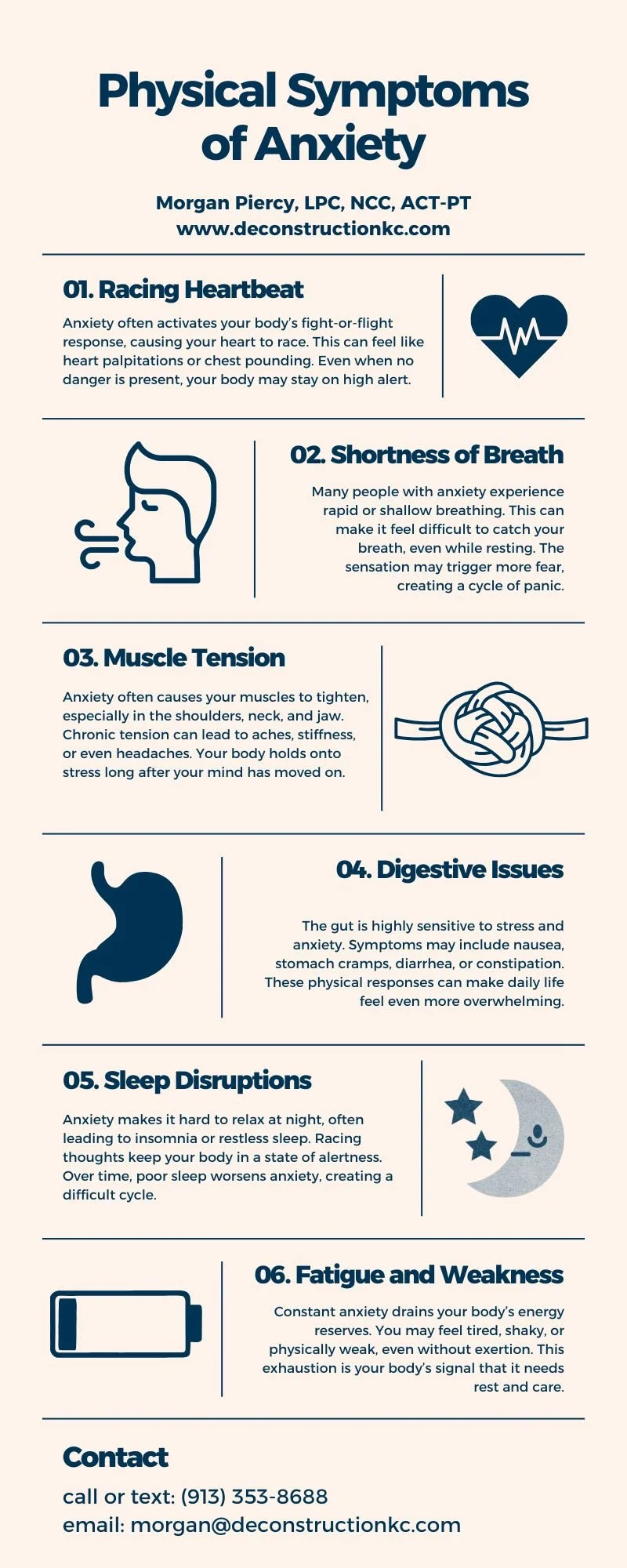
Physical health symptoms that could be explained by anxiety
Sources
Alvaro, P. K., Roberts, R. M., & Harris, J. K. (2013). A systematic review assessing bidirectionality between sleep disturbances, anxiety, and depression. Sleep, 36(7), 1059–1068. https://doi.org/10.5665/sleep.2810
Drossman, D. A., & Hasler, W. L. (2016). Rome IV—Functional gastrointestinal disorders: Disorders of gut–brain interaction. Gastroenterology, 150(6), 1257–1261. https://doi.org/10.1053/j.gastro.2016.03.035
Hayes, S. C., Strosahl, K. D., & Wilson, K. G. (2012). Acceptance and commitment therapy: The process and practice of mindful change (2nd ed.). Guilford Press.
Lackner, J. M., et al. (2018). Improvement in gastrointestinal symptoms after cognitive behavior therapy for refractory irritable bowel syndrome: Results from a randomized controlled trial. The American Journal of Gastroenterology, 113(12), 1901–1914. https://doi.org/10.1038/s41395-018-0396-8
Mayer, E. A. (2011). Gut feelings: The emerging biology of gut–brain communication. Nature Reviews Neuroscience, 12(8), 453–466. https://doi.org/10.1038/nrn3071
Nolen-Hoeksema, S. (2000). The role of rumination in depressive disorders and mixed anxiety/depressive symptoms. Journal of Abnormal Psychology, 109(3), 504–511. https://doi.org/10.1037/0021-843X.109.3.504
Starcevic, V., & Berle, D. (2013). Cyberchondria: Towards a better understanding of excessive health-related Internet use. Expert Review of Neurotherapeutics, 13(2), 205–213. https://doi.org/10.1586/ern.12.162