 Image 1 of 1
When does AI help and when does it keep your client stuck?
Therapists, are you worried about a client becoming dependent on AI?
A client asks ChatGPT what their date’s text really meant. Another uses it to break down a task they’ve been putting off, then spends so long refining the plan that they never start. Someone else asks, “Did I do something wrong?” and feels better until the doubt comes back.
Leaning on AI can look different from person to person: someone with OCD may keep asking for reassurance, someone with rejection sensitivity (sometimes called RSD) may replay a text with a chatbot to see if they’ve been rejected, someone with ADHD may get stuck refining a plan instead of starting, and someone with social anxiety may use AI to put off a conversation they want to have.
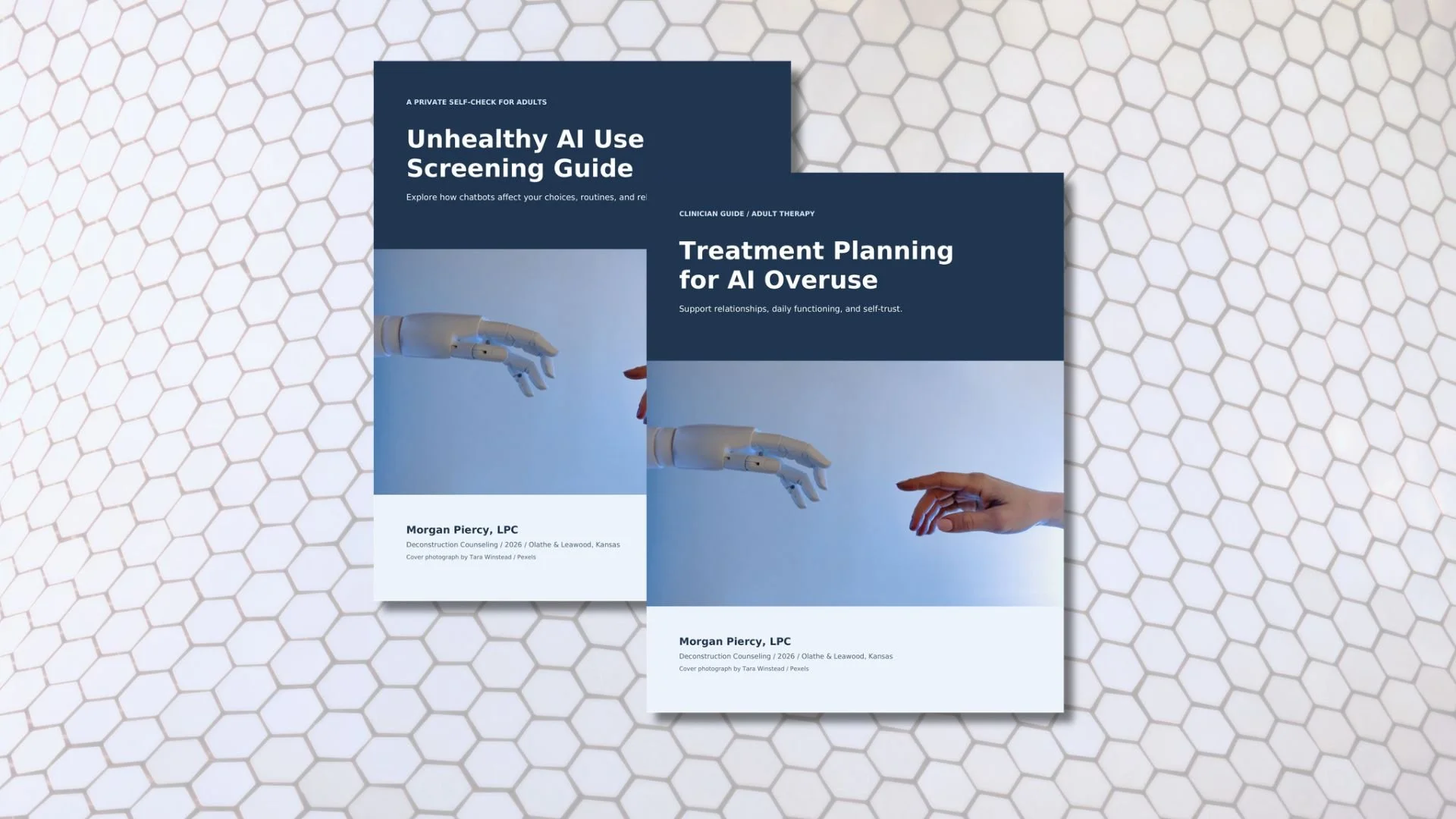
This two-PDF bundle helps you ask a better question in session: What is AI doing for this person, and what happens after they close the chat?
What’s inside
Unhealthy AI Use Screening Guide
A 16-question self-reflection worksheet that looks at the past two weeks of AI use across dating and relationships, daily tasks and decisions, repeated checking, and effects on everyday life. Use it to start a conversation with a client or work through it privately to make sense of your own habits.
Treatment Planning for AI Overuse
A companion guide for therapists with sample goals, measurable objectives, in-session strategies, and a worksheet for unpacking one real moment. It covers relying on AI for dating advice or connection, using AI to plan or get started, and seeking repeated reassurance when a doubt won’t settle. Includes scholarly references.
If you’re a therapist, you can bring one prompt into your next session and build from what your client tells you.
If you’re here for yourself (I see you, it takes guts to admit there might be a problem and you’ve come to the right place), start with the screening guide. It gives you room to notice what helps, what’s taking up more of your time than you want, and what you might try next.
Download both guides and start with one moment you’d like to understand.
These research-informed resources are for education and discussion. They have not been clinically validated and cannot be used to diagnose or replace professional assessment, treatment, or clinical judgment. Purchase or use does not establish a therapist-client relationship. To the extent permitted by law, Morgan Piercy, LPC, and Deconstruction Counseling disclaim liability arising from use or misuse of these materials.