 Image 1 of 1
Identity Crisis in Therapy: An ACT Screening & Treatment Planning Bundle
What do you do when a client says "I don't know who I am anymore"?
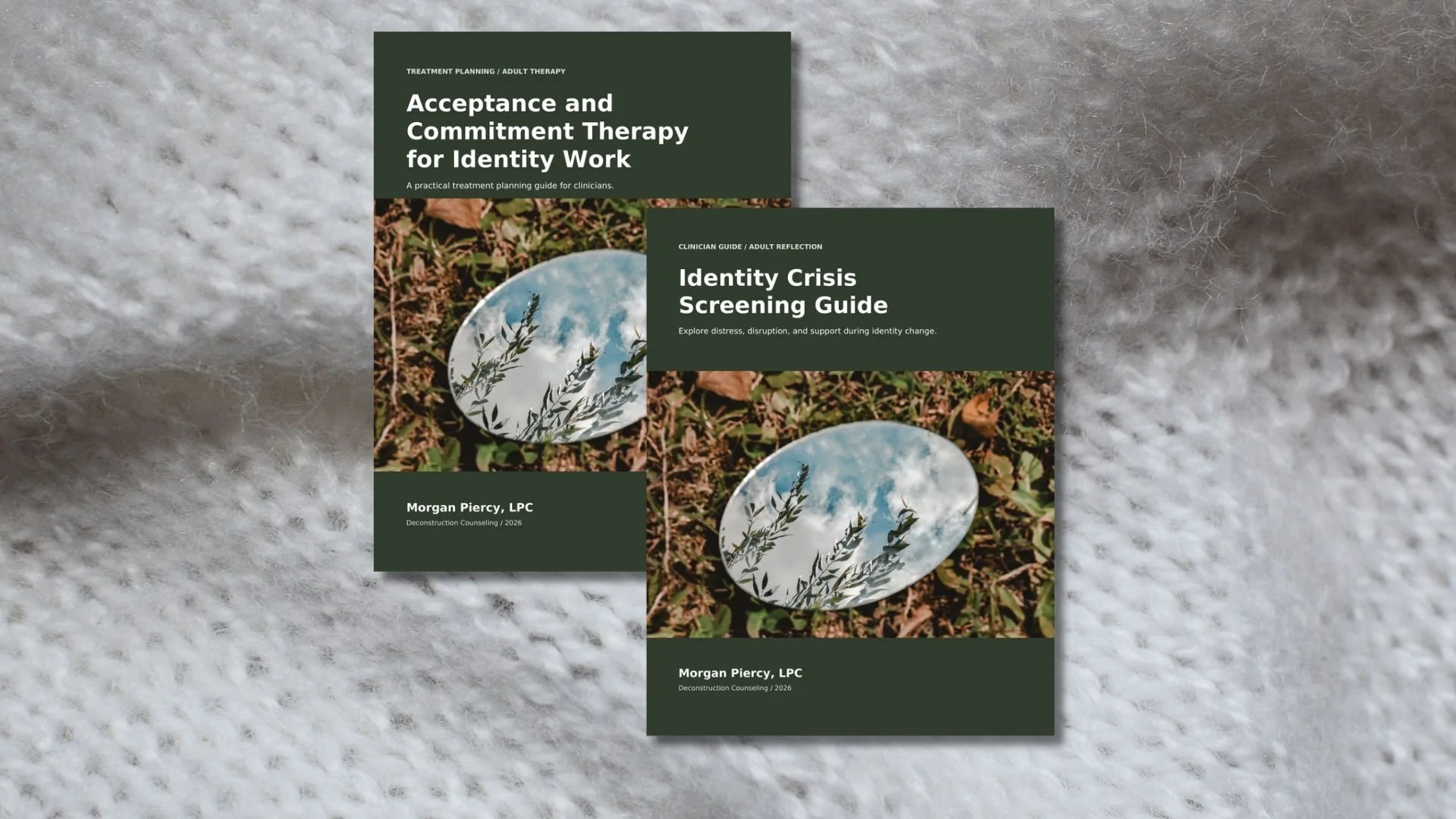
Two downloadable guides for therapists assessing identity distress and planning treatment with Acceptance and Commitment Therapy (ACT).
Your client misses the faith community they left, even though leaving gave them room to breathe. Or they’re starting to unmask and realizing how hard it is to name what they want after years of figuring out what other people expect. When they ask, “How do I know what’s really me?” it can be hard to decide what would help most in that hour.
This bundle gives you a place to begin. Use the screening guide to understand what changed, how it’s affecting daily life, and what still helps your client feel like themselves. Then use the ACT guide to turn one moment from their week into a treatment goal, an in-session exercise, or a step they can try before you meet again.
What you’ll get...
Identity Crisis Screening Guide · 12 pages
Bring structure to a conversation that can go in ten directions at once. Use 24 reflection prompts to explore sense of self, grief and belonging, masking and access needs, and the impact on daily life.
The guide helps you ask questions that change where you start. Is your client losing sleep because they’re trying to settle what they believe? Are they masking at work and spending the rest of the day recovering? Would naming what they’ve lost feel more useful right now than choosing what comes next?
You’ll also get guidance for reviewing responses together, a printable session summary worksheet, and APA references. You can start with one section when a client has limited energy or wants to focus on a specific concern.
Acceptance and Commitment Therapy for Identity Work · 15 pages
When a client says, “I should know who I am by now,” you can explore what that thought does in the moment and what they’d like to be able to do while it’s there.
The guide walks you through all six ACT processes and gives you language to use in session. Try the chessboard metaphor with a client who feels torn between missing their community and needing room to question. Use the sky and weather metaphor to help someone notice changing thoughts and feelings, or use a concrete exercise if imagery feels too abstract. Explore values in the client’s own words, then choose an action that fits their energy, safety, and access needs.
You’ll find sample treatment goals, measurable objectives, and two printable worksheets to help you plan and review the work. The guide also addresses a question that can come up with OCD: Is this defusion exercise helping the client get back to their day, or has it become another step they feel they have to do to be sure?
Built for the conversations you’re already having
Use the bundle with adults navigating faith deconstruction, religious trauma, neurodivergent unmasking or burnout, or the loss of a role that once gave them a sense of belonging. The examples leave room for a client to keep parts of their faith, protect their privacy, or ask for support before taking on a change.
Download the bundle and bring one question, one metaphor, or one worksheet into your next session.
Created by Morgan Piercy, LPC, of Deconstruction Counseling. These research-informed guides are for education and clinical discussion. The screening guide has not been clinically validated and cannot be used to diagnose. The materials do not replace therapy, clinical assessment, or supervision. Purchase or use does not establish a therapeutic or supervisory relationship. Apply your clinical judgment and follow applicable licensure requirements.