 Image 1 of 1
What do you do when something you did, witnessed, or couldn’t stop still weighs on you? Moral injury can happen far beyond military service. It can follow betrayal in a faith community, an impossible choice at work, or being punished for speaking up about harm.
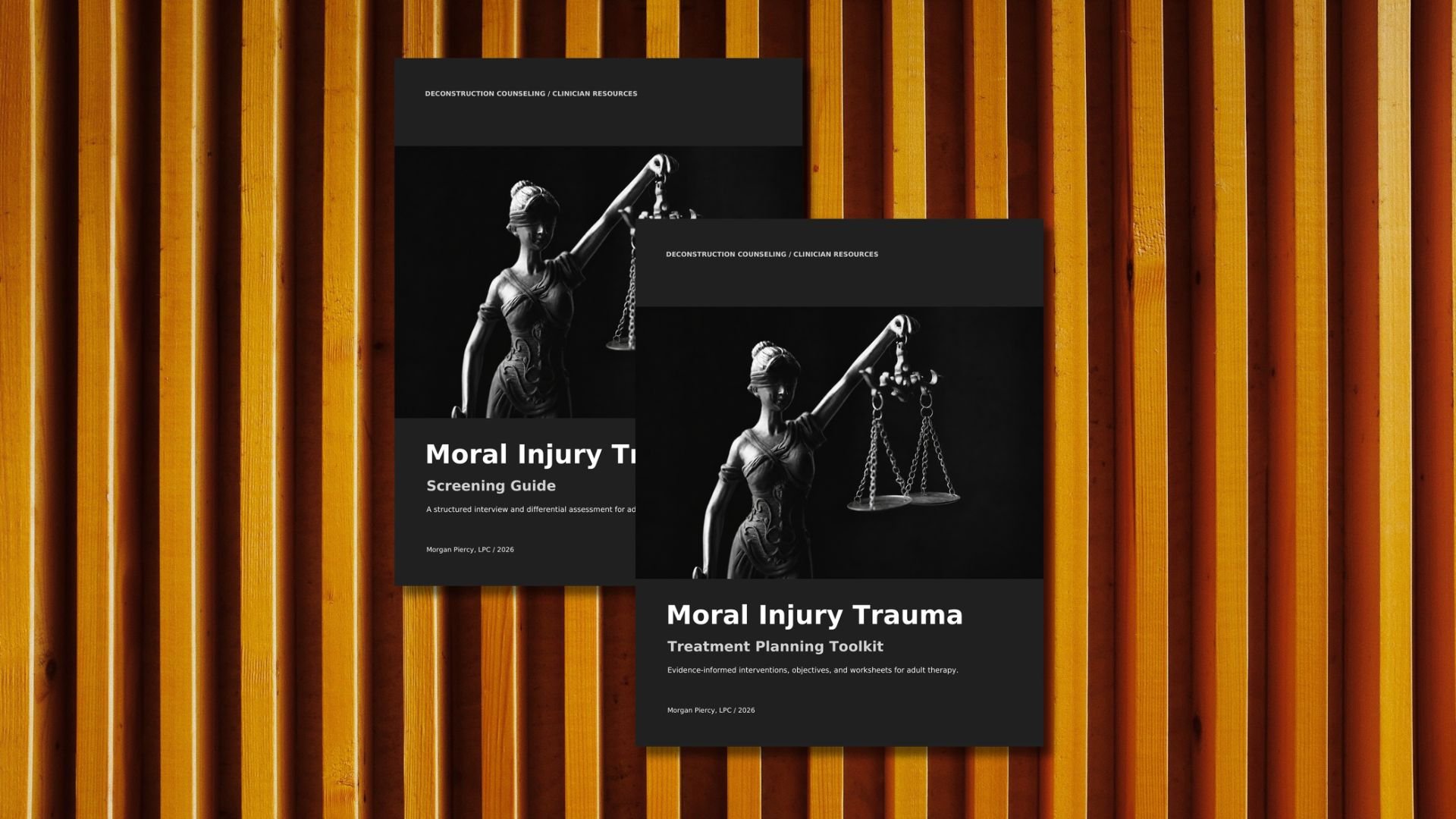
If you’re struggling with this yourself, start with the screening guide. Use the reflection prompts to put words to what happened, what it cost you, and what you’d like help with. You can work through the prompts privately or bring them to therapy.
If you’re a therapist, use the toolkit to turn that conversation into a treatment plan. It includes sample goals and interventions for guilt, shame, betrayal, and grief, plus guidance for recognizing when moral OCD or scrupulosity may also be keeping someone stuck.
Note from Morgan Piercy, LPC: My work with religious trauma survivors, neurodivergent adults, and people with OCD shaped the questions and examples in these guides. You can find more resources on my website, www.morganpiercy.com.